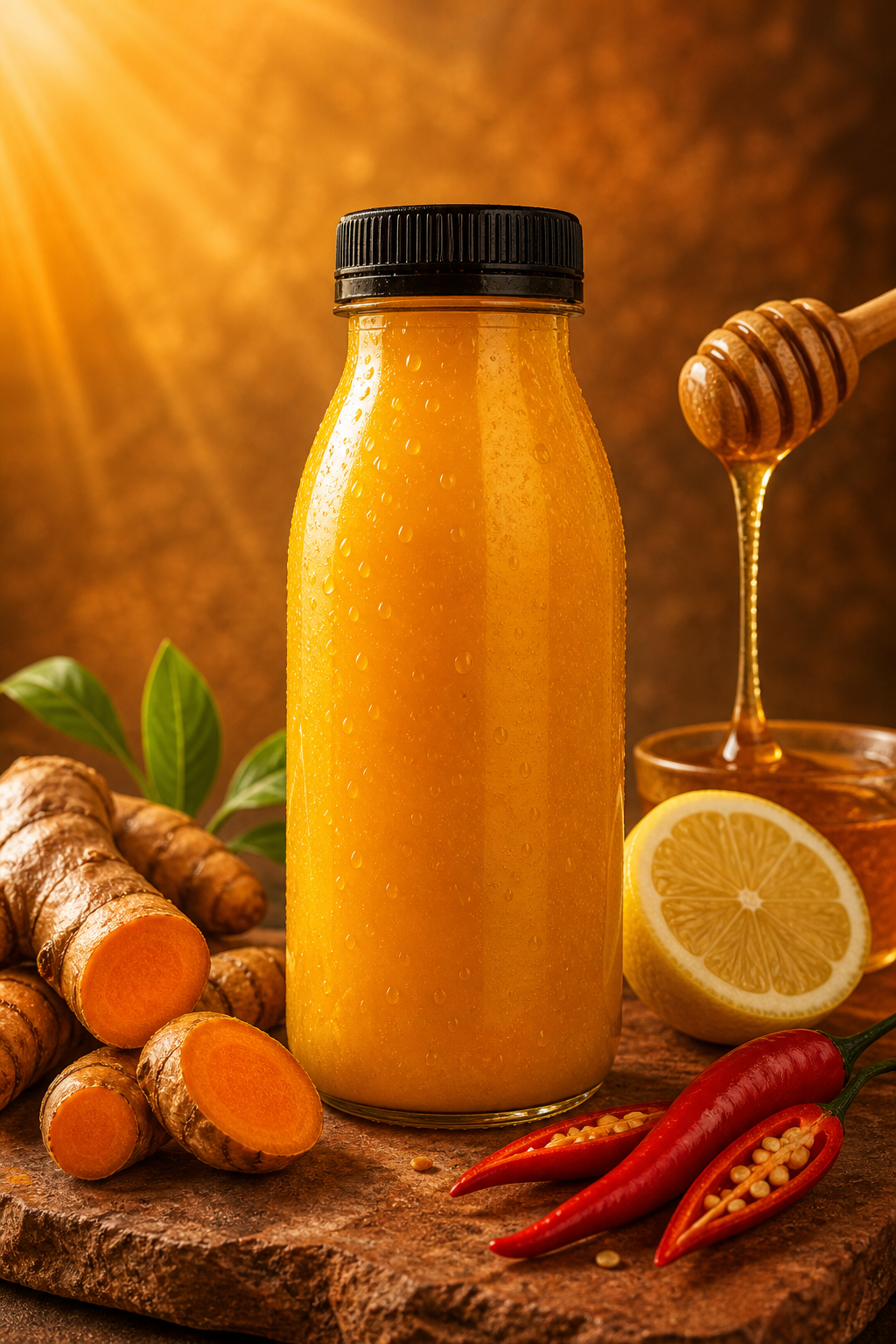
The Problem with Long-Term Ibuprofen Use
Ibuprofen (and NSAIDs broadly) work by inhibiting cyclooxygenase enzymes (COX-1 and COX-2) that produce prostaglandins — the lipid compounds that mediate inflammation and pain signalling. It's effective, fast, and widely available.
The issue is the COX-1 pathway. COX-1 prostaglandins protect the stomach lining. NSAID inhibition of COX-1 depletes this protection, leading to erosion of the gastric mucosa with regular use. Long-term NSAID users face significantly elevated risk of peptic ulcers, gastrointestinal bleeding, and — less well-known — kidney function impairment due to interference with renal prostaglandin production.
This is the context for "nature's ibuprofen" — not that Golden Fire is a pharmaceutical substitute for acute pain management, but that its mechanisms produce genuine anti-inflammatory effects through pathways that do not compromise the gut lining or renal function with regular use.
TNF-α: The Primary Target
Tumour necrosis factor alpha (TNF-α) is a cytokine — a protein that cells secrete to regulate immune responses. In the context of inflammation, TNF-α is a primary pro-inflammatory signal. Elevated TNF-α is associated with chronic inflammation, arthritis, inflammatory bowel conditions, and multiple autoimmune disorders.
Curcumin down-regulates TNF-α expression by inhibiting the transcription factors that activate its production. This is a mechanism so significant that pharmaceutical companies have developed expensive TNF-α inhibitor drugs (adalimumab, etanercept) for severe inflammatory conditions. Curcumin works on the same target through a different pathway — at a fraction of the cost, without the immune suppression risk that pharmaceutical TNF-α inhibitors carry.
The Clinical Comparison
Multiple clinical trials comparing curcumin to ibuprofen for osteoarthritis pain have found comparable efficacy. A commonly cited 2014 trial (Kuptniratsaikul et al.) found 1,500mg/day curcumin as effective as 1,200mg/day ibuprofen for knee osteoarthritis — with significantly fewer adverse gastrointestinal effects in the curcumin group.
NF-κB: The Inflammatory Master Switch
Nuclear factor kappa B (NF-κB) is a transcription factor that acts as a master regulator of inflammatory gene expression. When NF-κB is activated, it turns on a cascade of genes responsible for producing pro-inflammatory cytokines, adhesion molecules, and other compounds that maintain and amplify the inflammatory response.
Curcumin inhibits NF-κB activation. It does this by preventing the phosphorylation and degradation of IκB — the inhibitor protein that normally restrains NF-κB. When curcumin holds IκB in place, NF-κB stays bound and inactive. The inflammatory cascade doesn't get activated.
This is a fundamentally upstream mechanism. Rather than blocking individual inflammatory mediators (as ibuprofen targets prostaglandins), curcumin with cayenne-enabled bioavailability interferes with the transcription switch that produces those mediators in the first place.
Substance P and Capsaicin
Capsaicin's anti-inflammatory contribution is independent of its role in enhancing curcumin absorption. Substance P is a neuropeptide that transmits pain signals and triggers mast cell degranulation — a process that releases histamine and other inflammatory compounds in local tissue.
With repeated capsaicin exposure, substance P is depleted from sensory nerve terminals. Less substance P means less neurogenic inflammation and reduced pain transmission. This is the mechanism behind capsaicin-based topical pain relief products — Golden Fire delivers it systemically through consumption.
Lemon and Honey: Supporting Roles
Lemon's vitamin C is an anti-inflammatory in its own right — it participates in collagen synthesis (important for joint repair) and acts as an antioxidant that reduces oxidative stress, which is a driver of chronic inflammation. More practically, lemon's acidity in Golden Fire improves palatability and adds alkalizing compounds post-metabolism.
Honey contains several anti-inflammatory compounds — chrysin, kaempferol, and quercetin — flavonoids that inhibit pro-inflammatory pathways. Honey's antibacterial properties also reduce inflammatory inputs from the gut. It earns its place in the formula on merit, not just tastability.
Why This Formula Is In Demand
Public interest in natural anti-inflammatory solutions has grown consistently — driven by people seeking alternatives to long-term NSAID use for arthritis, joint pain, recovery, and chronic inflammation, and finding the curcumin + bioavailability literature compelling.
Golden Fire is the cold-pressed version of what that literature describes. Not a tincture, not a supplement, not a cooking spice — a ready-formulated activated curcumin drink, produced fresh, cleaned with ozonated water, and available on demand via text.